
Best Construction Categories
Best Facilities Management Categories
Best Human Resources Categories
Best Legal Management Categories
Best Manufacturing Categories
Best Medical Categories
Best Property Management Categories
Software Advice lists all providers across its website—not just those that pay us—so that users can make informed purchase decisions. Users can talk to our advisors for free to receive software recommendations matching their needs. Software providers pay us for sponsored profiles to reach users interested in their products.
Software Advice carefully verified over 2 million reviews to bring you authentic software experiences from real users. Our human moderators verify that reviewers are real people and that reviews are authentic. They use leading tech to analyze text quality and to detect plagiarism and generative AI.
Researchers at Software Advice use a mix of verified reviews, independent research, and objective methodologies to bring you selection and ranking information you can trust. While we may earn a referral fee when you visit a provider through our links or talk to an advisor, this has no influence on our research or methodology.
Blender vs D5 Render: Which is best for you?


Pricing available upon request
per month
and Demo

Features


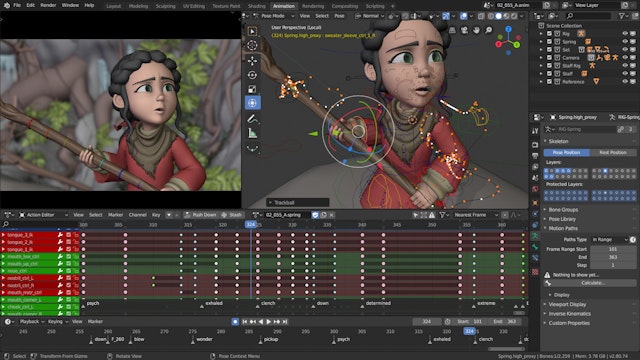
- The sheer-ability to do a parametric modelling and ability to create your own workspace, divide and play with windows is the thing I liked the most about Blender.
- Not sure if it was the software or limitations with my PC, but even with an 4GB dedicated Nvidia graphics card, it was a little slow at times once adding layering to the 3D models.
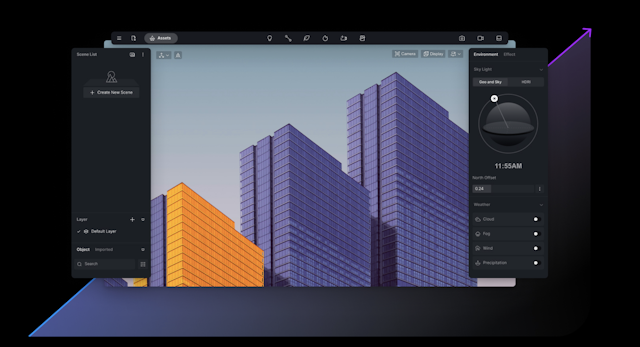
- It’s an amazing tool for creating realistic renders and animations of my 3D projects — especially for showing materials, lighting, and atmosphere in architectural designs.
- While D5 Render is a powerful tool, one limitation I’ve noticed as a student is its limited flexibility in custom asset creation. While the built-in library is rich, importing custom models or fine-tuning materials can sometimes be a bit clunky or less intuitive, especially when aiming for very specific design aesthetics.
in the comparison
in the comparison
in the comparison
in the comparison
Recommendations


