
Best Construction Categories
Best Facilities Management Categories
Best Human Resources Categories
Best Legal Management Categories
Best Manufacturing Categories
Best Medical Categories
Best Property Management Categories
Get 1-on-1 advice in 15 minutes. It's free.

Josh P.

Manufacturing system integration and compatibility: The hidden barrier to successful software adoption in manufacturing
Manufacturing organizations are investing in various digital solutions, from AI-driven analytics to advanced supply chain management platforms, in pursuit of greater efficiency and competitiveness. However, new software often exposes a quieter challenge: ensuring it connects effectively with existing systems.
Despite the clear benefits of digital transformation, many manufacturers encounter unexpected difficulties when connecting new tools to legacy infrastructure, which can slow progress and diminish returns on investment.
Drawing on insights from its 2026 Software Buying Trends Survey* of 3,385 manufacturing decision-makers, Software Advice highlights how integration and compatibility issues hinder software adoption, and offers practical strategies for achieving integrated manufacturing systems and successful MES integration.
Understanding the importance of software in manufacturing
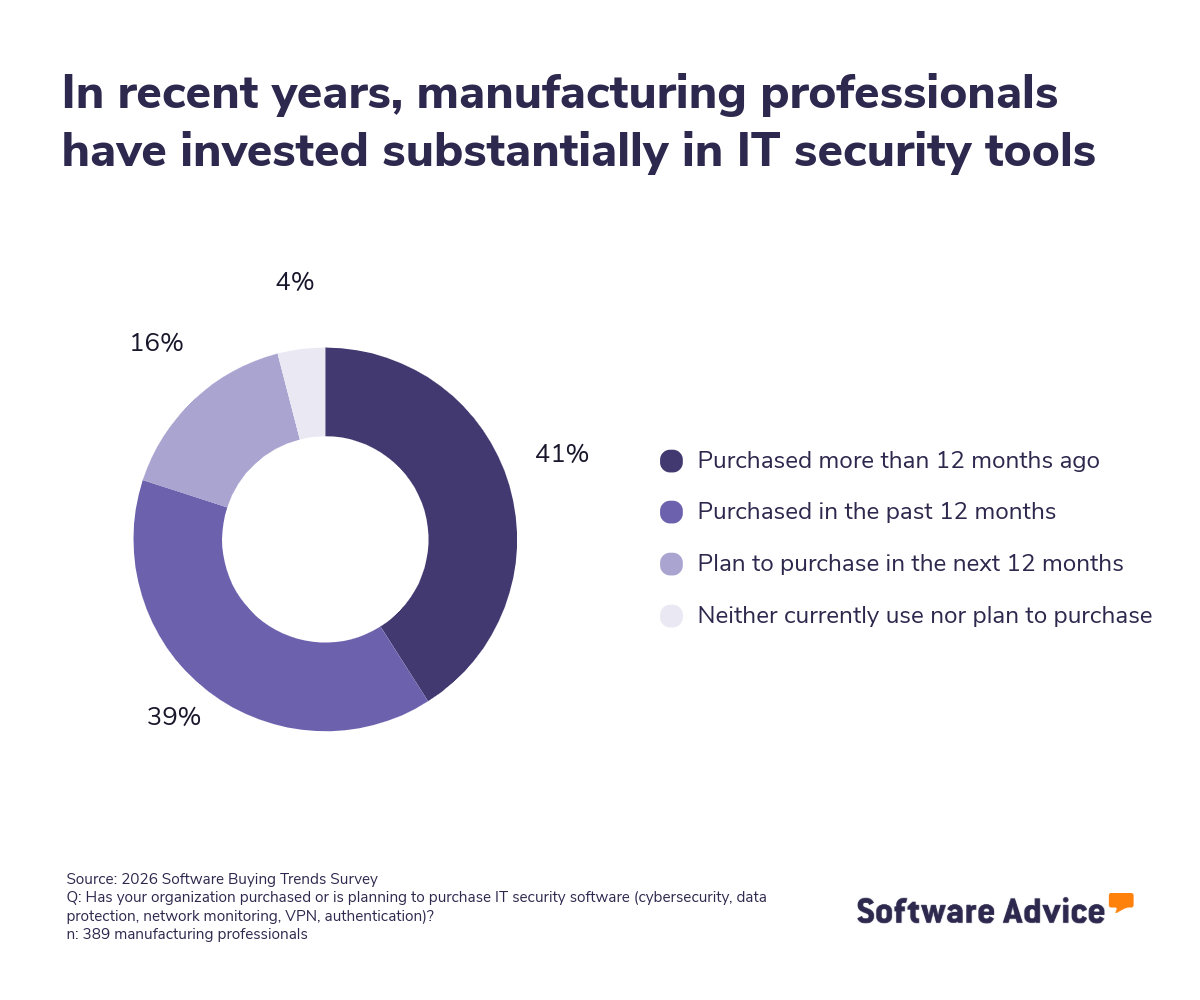
Manufacturing companies are investing in a broad spectrum of software, including IT security platforms, learning management systems, logistics and supply chain management tools, and manufacturing operations software. Survey data shows nearly half of manufacturers adopted new manufacturing operations software more than 12 months ago, with substantial investments in IT security (41%) and logistics solutions (43%). This trend underscores the industry’s commitment to digital transformation and the adoption of advanced manufacturing execution systems.
Advanced manufacturing execution systems (MES) are designed to bridge the gap between shop floor operations and enterprise-level planning. MES integration provides real-time visibility, control, and optimization of manufacturing processes. However, the effectiveness of these systems depends on robust manufacturing execution system integration with other software and hardware components. Without proper integration, even the most sophisticated MES solutions may not deliver their intended benefits.
Recognizing common challenges in software adoption
Manufacturers face several obstacles when implementing new software, with compatibility issues leading the list. Software Advice’s Software Buying Trends Survey reveals that 44% of respondents identified compatibility with existing systems as one of their primary challenges, followed by security concerns (38%) and data management (32%). Integrating new solutions with legacy systems, often highly customized or outdated, can prove difficult, resulting in fragmented data and operational inefficiencies.
Top challenges manufacturers face when planning new software investments
Leveraging AI effectively (46%)
Compatibility with existing systems (44%)
Security concerns (38%)
Data management (32%)
Identifying the right product (28%)
In-house skill to manage (26%)
Product compatibility solutions for manufacturers are increasingly sought after as organizations strive to overcome these hurdles. The complexity of integrating new software with existing technologies highlights the need for careful planning and a thorough understanding of both legacy and new systems. Without attention to compatibility, manufacturers may invest in tools that cannot be fully utilized.
Behaviors that lead to integration problems
Certain behaviors contribute to integration problems in manufacturing. Many organizations rush into software purchases without conducting thorough compatibility assessments or considering how new solutions will fit within their current technology landscape. This often results in unexpected disruptions, as 44% of survey respondents reported experiencing integration issues during implementation*.
Integration issues emerge as a key disruption faced by manufacturers during software implementation
Data migration problems (45%)
Integration issues (44%)
Delays (41%)
Difficult configuration process (29%)
Inadequate user training (28%)
Security or compliance issues (28%)
Another common pitfall is failing to involve both IT and business unit leaders in the software selection process. When decisions are made in silos, operational needs and technical requirements can become misaligned. This misalignment can lead to the selection of software that does not fully support business goals or requires costly customizations for effective manufacturing execution system integration.
Real-world consequences of poor integration
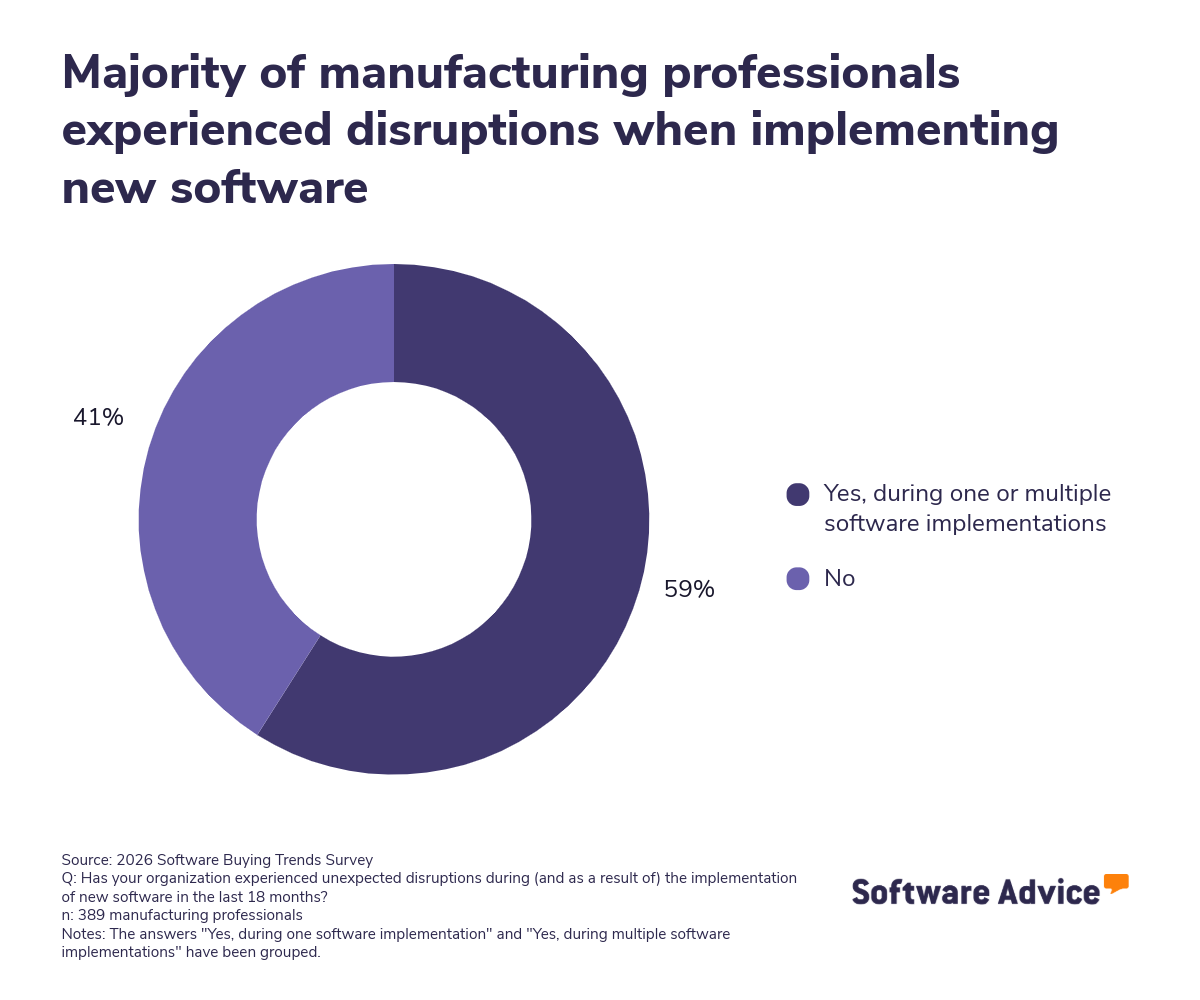
When manufacturing system integration is not properly planned, manufacturers face multiple negative outcomes, including project delays, budget overruns, and operational disruptions. Survey data indicates that 59% of manufacturers reported experiencing disruptions during software implementation in the past 18 months*. These disruptions are often caused by integration problems, data migration challenges, inadequate training, and insufficient vendor support.
In the context of advanced manufacturing execution systems, poor MES integration can result in underutilized systems, fragmented workflows, and missed opportunities for process optimization. The inability to achieve integrated manufacturing systems can also hinder the adoption of future technologies, locking manufacturers into outdated processes and limiting their ability to compete.
Positive behaviors that support successful integration
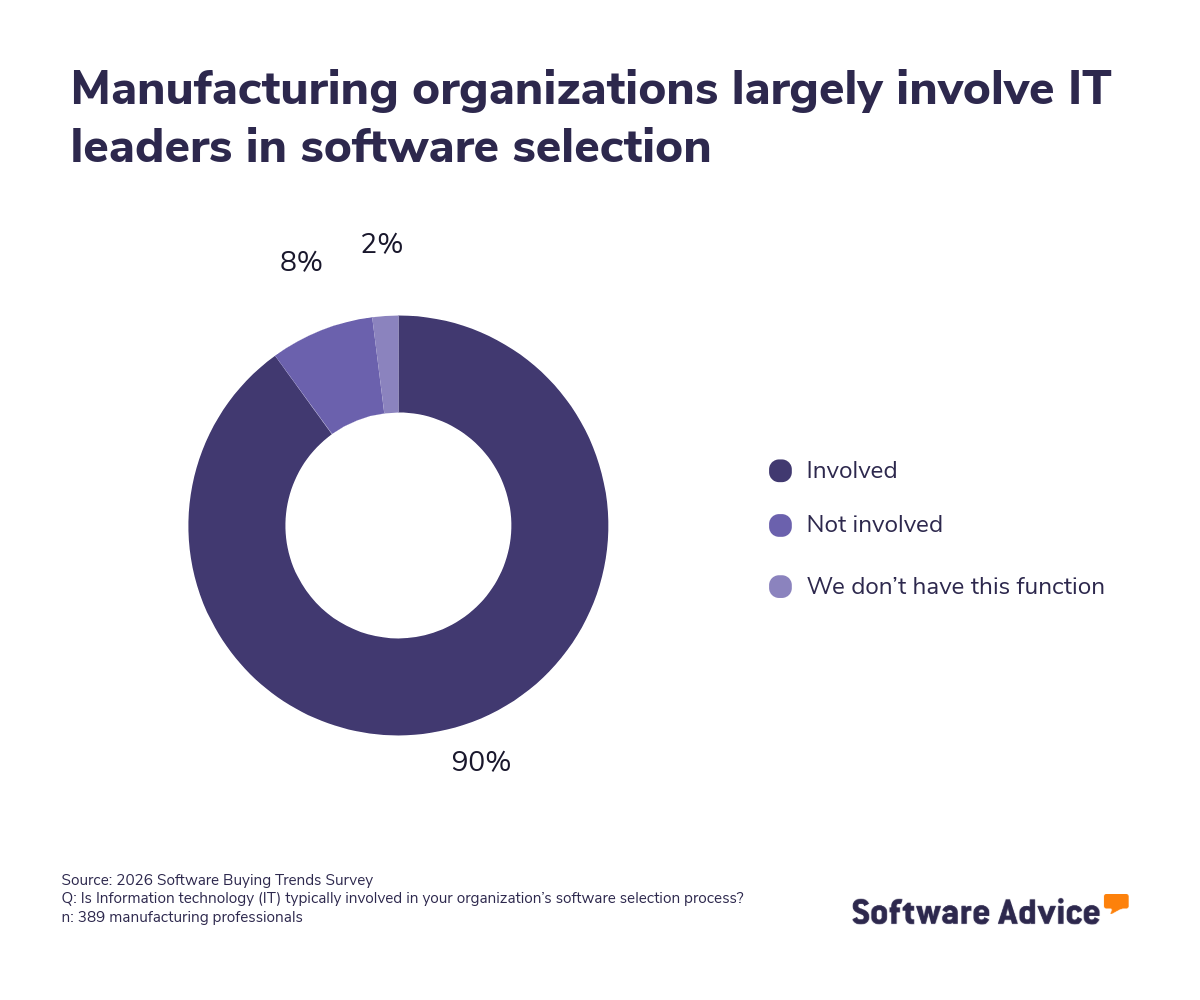
Manufacturers who achieve successful MES integration and overall system compatibility tend to approach technology adoption with careful planning and collaboration. Software Advice’s Software Buying Trends Survey found that 90% of manufacturers involve IT leaders in software selection, and over 73% include business unit leaders. This cross-functional approach ensures both technical and operational needs are considered.
Organizations that anticipate potential disruptions, such as integration issues, data migration challenges, and training gaps, are better prepared to manage them. Proactive manufacturers request detailed implementation plans and ongoing vendor support, recognizing that insufficient vendor assistance was cited as a disruption by 24% of respondents. Prioritizing staff training and allocating resources for change management helps reduce the risk of underutilization and operational delays.
Successful manufacturing execution system integration is supported by behaviors such as engaging stakeholders early, setting realistic expectations for timelines and costs, and maintaining open communication with vendors and internal teams throughout the implementation process. These practices help manufacturers navigate the complexities of system compatibility and maximize the value of their software investments.
Practical tips for manufacturers
To improve the chances of successful software adoption and achieve integrated manufacturing systems, manufacturers should:
Conduct thorough compatibility assessments before selecting new software, including reviewing technical specifications and integration requirements. This is essential for product compatibility solutions for manufacturers seeking to avoid costly surprises.
Engage stakeholders from IT, operations, and business units early in the process to ensure alignment and buy-in. Integrated manufacturing systems require input from all relevant parties.
Request detailed implementation plans and support commitments from vendors, and verify their experience with similar integrations. Reliable vendor support is critical for successful manufacturing system integration.
Invest in comprehensive staff training and change management to minimize resistance and maximize the benefits of new technology. Well-prepared teams are more likely to embrace new systems and use them effectively.
Consider using integration platforms, middleware, or APIs to future-proof their systems and facilitate smoother connections between new and existing software. For example, manufacturers may need to integrate advanced manufacturing execution systems (MES), enterprise resource planning (ERP) software, product lifecycle management (PLM) tools, quality management systems (QMS), and supply chain management (SCM) platforms. Leveraging integration solutions can help ensure these systems work together seamlessly.
Explore product compatibility solutions for manufacturers that are specifically designed to bridge gaps between legacy applications and modern software.
From hidden barrier to strategic priority: Ensuring seamless integration in manufacturing software adoption
System integration and compatibility are not just technical hurdles, they are central to the success of any digital initiative in manufacturing. As highlighted by Software Advice’s Software Buying Trends Survey, these hidden barriers can undermine even the most promising software investments, leading to disruptions, inefficiencies, and missed opportunities.
Manufacturers that take a proactive approach, by thoroughly assessing compatibility, involving cross-functional teams, and prioritizing integration from the outset, are better positioned to realize the full benefits of digital transformation. Addressing integration challenges early not only reduces risk and cost but also ensures that new technologies enhance, rather than hinder, operational performance.
By recognizing integration as a strategic priority and adopting best practices for software selection and implementation, manufacturers can build a more resilient, agile, and future-ready operation. The path to successful software adoption may be tricky, but with careful planning and collaboration, it can lead to lasting competitive advantage.
Useful resources
AI adoption in manufacturing: How aggressive and balanced approaches will shape the industry in 2026
Best Practices for Planning a Budget for Smart Manufacturing
Survey methodology
*Software Advice 2026 Software Buying Trends survey was conducted online in August 2025 among 3,385 respondents in Australia (n=281), Brazil (n=278), Canada (n=293), France (n=283), Germany (n=279), India (n=260), Italy (n=263), Mexico (n=288), Spain (n=273), the U.K. (n=299), and the U.S. (n=588), at businesses across multiple industries (including 389 respondents in manufacturing roles), ages (1 year in business or longer), and sizes (5 or more employees). Business sizes represented in the survey include: 1,676 small (5-249 full-time employees), 822 midsize (250-999), and 887 enterprise (1,000+). The goal of this study was to understand the timelines, organizational challenges, research behaviors, and adoption processes of business software buyers. Respondents were screened to ensure their involvement in business software purchasing decisions.