
Best Artificial Intelligence Software of 2026
Updated March 27, 2026 at 1:32 AM

Written by Supriya Deka
Market Research Specialist

Edited by Lindsay Page
Editor
- FrontRunners
- Popular Comparisons
- Buyers Guide
Compare Products
Showing 1 - 25 of 759 products
Compare Products
Sort by
Reviews: Sorts listings by the number of user reviews we have published, greatest to least.
Average Rating: Sorts listings by overall star rating based on user reviews, highest to lowest.
Alphabetically (A-Z): Sorts listings by product name from A to Z.

Site24x7 is a cloud-based website and server monitoring platform that helps small to large size businesses monitor websites, ser...Read more about Site24x7


Site24x7's Best Rated Features
See All
Site24x7's Worst Rated Features
See All

Zendesk AI sits at the core of Zendesk, enhancing every aspect of the customer experience. It transforms basic bots into autonom...Read more about Zendesk AI


Adobe Firefly is a generative AI design tool for creating images, videos, audio, and vector graphics. It is designed for content...Read more about Adobe Firefly


Adobe Firefly's Best Rated Features
See All
Adobe Firefly's Worst Rated Features
See All

blocks.diy platform uses advanced AI to translate natural language descriptions into fully functional business applications in r...Read more about Blocks


Fin is an AI system designed to assist with customer service by resolving support inquiries across various communication channel...Read more about Fin


Fin's Best Rated Features
See All
Fin's Worst Rated Features
See All

ModMed is a cloud-based electronic health record (EHR) and practice management system designed for specialty medical practices. ...Read more about ModMed


ModMed's Best Rated Features
See All
ModMed's Worst Rated Features
See All

DataSnipper is an Excel-native intelligent automation platform for audit and finance teams. In the agentic era, DataSnipper intr...Read more about DataSnipper


DataSnipper's Best Rated Features
See All
DataSnipper's Worst Rated Features
See All

ZoomInfo Copilot is a business intelligence solution that provides insights and data on accounts to help sellers make better dec...Read more about ZoomInfo Copilot


Doxel is a Construction Optimization Platform that provides data in real-time. Utilizing project data across BIM, schedules, and...Read more about Doxel


The #1 AI for WCAG and ADA compliance | Easy 2-minute installation | Auto-pilot maintenance | Accessibility statement | Automate...Read more about Equally AI


Equally AI's Best Rated Features
See All
Equally AI's Worst Rated Features
See All

Vizard is a video generator and editor powered by artificial intelligence. This tool is suitable for marketers, creators, agenci...Read more about Vizard


Vizard's Best Rated Features
See All
Vizard's Worst Rated Features
See All

Apify is a full-stack web scraping and automation platform that helps anyone get value from the web. At its core is Apify Store)...Read more about Apify
Apify's Best Rated Features
See All
Apify's Worst Rated Features
See All

Liine is an AI-powered call tracking, marketing analytics and ad optimization platform for multisite healthcare practices. Our p...Read more about Liine


Liine's Best Rated Features
See All
Liine's Worst Rated Features
See All

From design to deployment, UserWay makes it easier for teams to prioritize accessibility and continuous compliance. The UserWay ...Read more about UserWay Accessibility Widget
UserWay Accessibility Widget's Best Rated Features
See All
UserWay Accessibility Widget's Worst Rated Features
See All

Virbo is an AI-powered video generation platform. It allows users to create engaging, professional-looking videos in minutes. Th...Read more about Virbo
Virbo's Best Rated Features
See All
Virbo's Worst Rated Features
See All

Scalenut reduces 90% of time and drives 10x organic traffic by 🛠️automating your entire content lifecycle with AI. Keyword plan...Read more about Scalenut

Scalenut's Best Rated Features
See All
Scalenut's Worst Rated Features
See All

Jasper is artificial intelligence (AI) that helps businesses create content for blogs, social media posts, Facebook advertisemen...Read more about Jasper


Jasper's Best Rated Features
See All
Jasper's Worst Rated Features
See All

Anyword is an artificial intelligence software designed to help marketers create personalized messages for the target audience a...Read more about Anyword
Anyword's Best Rated Features
See All
Anyword's Worst Rated Features
See All

Frase helps you research, write, and optimize high-quality SEO content in minutes instead of hours. It lets staff members utiliz...Read more about Frase
Frase's Best Rated Features
See All
Frase's Worst Rated Features
See All

Writesonic is an AI-powered writing assistant with a mission to empower everyone in the world to write anything and publish anyw...Read more about Writesonic

Writesonic's Best Rated Features
See All
Writesonic's Worst Rated Features
See All

Luigi's Box is an AI-driven, cloud-based software platform that uses machine learning to help businesses make better decisions b...Read more about Luigi's Box
Luigi's Box's Best Rated Features
See All
Luigi's Box's Worst Rated Features
See All

Shelf is a cloud-based platform that helps modern businesses thrive with on-demand answers to the questions that block customer ...Read more about Shelf
Shelf's Best Rated Features
See All
Shelf's Worst Rated Features
See All

neuroflash is Europe's No. 1 AI content suite for marketing teams. The AI copywriter creates short- and long-form copy much fast...Read more about neuroflash
neuroflash's Best Rated Features
See All
neuroflash's Worst Rated Features
See All

MarketingBlocks is the world’s first Agentic AI platform built to help experts, coaches, and founders grow visibility, leads, an...Read more about MarketingBlocks
MarketingBlocks's Best Rated Features
See All
MarketingBlocks's Worst Rated Features
See All

Admin By Request is a cybersecurity solution designed to make comprehensive security simple. Our main goal is to enable enterpri...Read more about Admin By Request

Admin By Request's Best Rated Features
See All
Admin By Request's Worst Rated Features
See All



Your Guide to Top Artificial Intelligence Software, September 2025
Software Advice uses reviews from real software users to highlight the top-rated Artificial Intelligence products in North America.
Learn how products are chosenExplore FrontRunners


“Usability” includes user ratings for Functionality and Ease of Use.
“Customer Satisfaction” includes user ratings for Customer Support, Likelihood to Recommend and Value for Money.
Reviews analysis period: The reviews analysis period spans two years and ends the 15th of the month prior to publication.
Buyers Guide
This detailed guide will help you find and buy the right artificial intelligence software for you and your business.
Last Updated on April 24, 2025Technology is continuously evolving and businesses big and small are making use of different technologies to stand out in the competition. One such technology is artificial intelligence (AI), which can help users, including application developers and marketing/sales professionals, analyze data to make decisions and predict future outcomes.
Artificial intelligence software is capable of learning, computing, and solving complex problems with high efficiency. It consists of machine learning, neural networks, and natural language processing technologies.
Artificial intelligence software is capable of intelligent behaviour which is being adopted by different industries for a variety of applications such as smartphone assistants, ATMs that can read checks, voice and image recognition software on social networks, serving ads on websites based on users' search history, and personalized recommendations based on customer purchase history.
Here’s what we'll cover in this buyers guide:
What is artificial intelligence (AI) software?
Artificial intelligence (AI) software is a computer program that imitates human behavior such as learning, reasoning, problem solving, and analysis. These systems can analyze large data sets to find correlations and patterns and use these patterns to make predictions and provide valuable insights.
Some of the applications of artificial intelligence software include speech recognition, natural language processing, expert systems (designed to solve complex problems by replicating the decision-making capabilities of a human), and augmented reality. These applications can be in the form of smartphone assistants, AI chatbots, and voice and image recognition software.
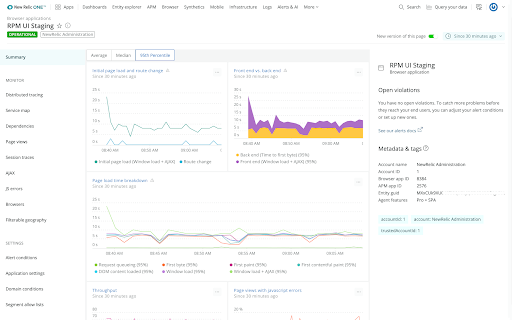
Analytics features in New Relic One Software (Source)
Common features of artificial intelligence (AI) software
Machine learning | Applies machine learning (ML) algorithms to business data (such as sales, revenue, and transactions) and builds analytical models in order to learn from data, identify patterns, and make decisions with minimal human interference. |
Understands, interprets, and manipulates human language such as speech and text. It can be utsed in a variety of business areas such as customer service, customer experience, sales (in the form of chatbots), and data analysis. | |
Uses data mining, statistics, ML, and AI to analyze data and user behavior to make usage predictions. | |
Speech recognition | Processes human speech into a written format. It is also known as speech-to-text. |
Virtual personal assistant (VPA) | Performs tasks and services for an individual based on commands and questions. Examples of VPA include Google Assistant, Siri, and Alexa. Users can ask the assistants questions, control home automation devices and media playback via voice, and manage other basic tasks such as email, to-do lists, and calendars with verbal commands. |
Chatbot | Conducts online chat conversations via text or text-to-speech, as an alternative or precursor to direct contact with a live human agent. |
Multi-language | Detects text or speech in multiple languages and can convert that text or speech into another language. |
Process/workflow automation | Defines process paths and applies the logic to enable automatic creation of future processes and workflows to minimize overlap, repetitive processes, and human error. |
What type of buyer are you?
Before purchasing an AI solution, you should determine which buyer category you're in so you can choose the right tool. The majority of buyers fall into the following categories:
Developers: Software developers and computer programmers work on building and creating software and applications by writing code, identifying bugs, and running software tests throughout the software development lifecycle. But these tasks are prone to human error and take a lot of time, and repetitive efforts not only delay the development process, but also impact the quality of the end product. Artificial intelligence software, with the help of machine learning capabilities, can handle repetitive tasks such as testing the software, detecting and fixing bugs before a product is released, and recommending changes. Using AI software will allow developers to focus more on design and feature building, as it enables fast and accurate testing that shortens the development process, and ensures a high-quality end product. An open source AI solution that provides code libraries, data preparation, model deployment, debugging, and integration with other languages such as Python, Java,and C++ would be suitable for these needs. Open source platforms allow developers to easily build and deploy applications that are customized for organization or customer needs.
Marketing and sales professionals: These professionals are looking to acquire customers, maintain brand loyalty, and build stronger relationships with their customers. They need to understand customer emotions, collect and analyze feedback, and study trends that can impact their marketing efforts. Software with AI capabilities are capable of doing all these tasks with minimum human intervention and provide insights that otherwise would go unnoticed. It can also automate tasks to save employees time on repetitive work such as answering customer queries, recommending products, capturing leads, and providing personalized experience to customers throughout their journey. An AI tool that includes machine learning, natural language processing, speech recognition, and predictive analytics along with multi-language features would help such buyers to get actionable insights, automate tasks, and address customer problems efficiently.
Benefits of artificial intelligence software
More accurate data analysis: With the growing number of devices in use, the data generated from these devices is increasing day by day. Manually analyzing this huge volume of data can be cumbersome and prone to errors. AI machine learning algorithms are capable of sifting through data much faster than humans and providing actionable insights for you to make informed business decisions.
Improved customer service: AI capabilities allow you to gain real-time insights across all customer contact channels. Machine learning and natural language processing applications are being used in contact centers and customer service departments to solve customer problems by solving their basic and redundant issues without the need for human intervention. This allows your agents to focus on more complex problems, which in turn boosts customer experience.
Automation: AI platforms can automate all kinds of tasks your team would otherwise find tedious and time-intensive. The range of tasks from predictive maintenance to filling in common phrases in your email can be automated using an artificial intelligence tool. Additionally, these platforms are capable of taking care of multiple functions simultaneously, which increases the productivity and decreases the time spent on tasks such as such as shortlisting CVs, employee scheduling, and emailing.
Predictive capabilities: Artificial intelligence solutions have predictive functionality that can analyze historical data to detect corrections and patterns to predict outcomes such as customer churn, equipment maintenance, and fraud detection. Such predictive capabilities can help your organization against any serious losses or create opportunities for business value.
Key considerations:
Security: Artificial intelligence tools are capable of going through a huge volume of data (historical or confidential), performing analytics, providing actionable insights, and predicting the future. This makes security an integral part of such tools. The tool you select should have data protection and security measures in place around the data it collects, analyzes, and communicates with other devices. Also, ensure that the tool complies with industry-security standards such as General Data Protection Regulation (GDPR). This feature will help you maintain privacy, and prevent theft, data loss, and any kind of fraud.
Software type: It is important to consider whether you need a free, open source AI software, or a paid version of the software. If you are an independent app developer looking to build machine learning models, develop advanced applications, and speed up research and discovery, you can opt for a free and open source AI platform. Such tools provide pre-built algorithms and easy-to-use interfaces that will help you build and deploy customized models according to your needs.
But if you are looking to integrate AI functionalities into your business outcomes, such as perform predictive analytics on your customer data, support digitization process, and integrate AI to your existing software such as a custom built chatbot, a paid version of AI software will better suit your needs. A paid version will provide better security for your data, provide custom integrations, and give you greater computing power.
Additionally, software requires more maintenance compared to commercial versions as it constantly evolves because of user suggestions and requires a dedicated IT team for implementation and deployment. A commercial version of AI software is comparatively easy to implement as the third-party vendor takes care of it with their integration support.
Trial version: Artificial intelligence is a technology with vast areas of applications and functionalities. Before deciding on any software tool, you should take time to understand the working and setup of the tool, the business value it can provide, and its learning curve. For this, it is important to look for a software that provides trial versions to help you ensure it is the right option for your company before making a purchase.
Market trends to understand:
Here is a market trend to keep in mind when selecting an artificial intelligence platform for your business:
Convergence of artificial intelligence (AI) and Internet of things (IoT): The Internet of things combined with artificial intelligence has brought us artificial intelligence of things (AIoT). While IoT lets devices interact using the internet and provide data around it, AI makes these devices learn from their data and experience in order to drive smart actions. AIoT is capable of creating intelligent machines that can simulate smart human behaviour while also supporting decision-making with little or no human interference. This includes voice assistants (such as Alexa, and Siri), fleet management, drone monitoring and delivery, and healthcare wearables. Gartner estimates that by 2022, more than 80% of IoT projects will have an AI component which will help companies to gain capabilities they earlier could not achieve by applying AI to specific business problems.
Note: The application selected in this article is an example to show a feature in context and is not intended as an endorsement or recommendation. It has been obtained from sources believed to be reliable at the time of publication.