


Best Speech Therapy Software of 2026
Updated January 27, 2025 at 9:58 AM
- Popular Comparisons
- Buyers Guide
Compare Products
Showing 1 - 25 of 64 products
Compare Products
Sort by
Reviews: Sorts listings by the number of user reviews we have published, greatest to least.
Average Rating: Sorts listings by overall star rating based on user reviews, highest to lowest.
Alphabetically (A-Z): Sorts listings by product name from A to Z.

TheraOffice is an integrated physical therapy EMR software that seamlessly manages patient intake, scheduling, documentation, bi...Read more about TheraOffice

Fusion by Ensora Health is a leading all‑in‑one EHR built specifically for occupational, physical, and speech therapists. Desig...Read more about Fusion
Fusion's Best Rated Features
See All
Fusion's Worst Rated Features
See All

Ambiki is a practice management platform built from the ground up for pediatric therapists—speech-language pathologists, occupat...Read more about Ambiki


Ambiki's Best Rated Features
See All
Ambiki's Worst Rated Features
See All

Practice Pro is a fully integrated, web-based EMR and Practice Management solution for outpatient physical therapy, pediatric th...Read more about Practice Pro


Practice Pro's Best Rated Features
See All
Practice Pro's Worst Rated Features
See All

CentralReach is the leading AI-powered EMR and practice management platform purpose-built for autism and IDD care. Trusted by 4,...Read more about CentralReach
CentralReach's Best Rated Features
See All
CentralReach's Worst Rated Features
See All

Everything you need to run a better practice. Noterro is an online clinic management tool for Massage Therapists, Physiotherapis...Read more about Noterro

Noterro's Best Rated Features
See All
Noterro's Worst Rated Features
See All

SPRY Therapeutics, Inc. is the inventor of SPRY EMR, an integrated practice management solution that enables rehab therapy profe...Read more about SPRY

SPRY's Best Rated Features
See All
SPRY's Worst Rated Features
See All

Cliniko is a cloud-based practice management solution designed to help businesses in the healthcare sector manage appointment sc...Read more about Cliniko

Cliniko's Best Rated Features
See All
Cliniko's Worst Rated Features
See All

PtEverywhere transforms rehab therapy practices with its comprehensive growth solution. Designed for physical, occupational, and...Read more about PtEverywhere


PtEverywhere's Best Rated Features
See All
PtEverywhere's Worst Rated Features
See All

Mercury Medical, by CrisSoft, is a practice management solution suitable for a variety of specialties and practices offered on S...Read more about Mercury Medical

Pediatric physical, occupational, and speech therapy practices are the focus of eTherapyDocs. Every part of the user interface w...Read more about eTherapyDocs


Practice Mate is a cloud-based medical practice management solution offered by Office Ally, designed to meet the needs of health...Read more about Practice Mate

Practice Mate's Best Rated Features
See All
Practice Mate's Worst Rated Features
See All

Hypnotes is a practice management software that is specifically designed to eliminate redundant tasks for practice management op...Read more about Hypnotes

TherapyPM is a medical practice management software that includes features such as custom tagging, auth management, payroll, tel...Read more about TherapyPM

TherapyPM's Best Rated Features
See All
TherapyPM's Worst Rated Features
See All

BestPT by BILLING DYNAMIX, LLC is a cloud-based ONC-certified practice management solution designed for physical therapists. It ...Read more about bestPT


APTA Connect by Cedaron Medical is a scalable, on-premise Practice Management solution for rehabilitative practices of all sizes...Read more about APTA Connect

OptimisPT is a cloud-based electronic medical record (EMR) solution that provides all-in-one, evidence-based rehab therapy docum...Read more about OptimisPT


OptimisPT's Best Rated Features
See All
OptimisPT's Worst Rated Features
See All

Planetrehab offers physical and occupational therapists a turnkey solution that offers integrated practice management, billing a...Read more about Planetrehab

Zanda is a practice management system for allied health practices, offering tools that streamline practice management. Features ...Read more about Zanda
Zanda's Best Rated Features
See All
Zanda's Worst Rated Features
See All

Raintree is a complete business and Physical Therapy EMR/EHR software for Pediatric & Adult Therapy & Rehab PT, OT, SLP and ABA ...Read more about Raintree Systems


HENO is an integrated, cloud-based solution suitable for physical therapy/rehab and speech therapy practices of all sizes. Key f...Read more about HENO

HENO's Best Rated Features
See All
HENO's Worst Rated Features
See All

WellSky Rehabilitation (formerly MediLinks) is a web-based electronic health record that goes beyond basic functions like docume...Read more about WellSky Rehabilitation

Healthie is a true, all-in-one practice management platform designed to simplify and enhance the way healthcare clinicians run t...Read more about Healthie

Healthie's Best Rated Features
See All
Healthie's Worst Rated Features
See All

Practice perfect EMR is an on-premise electronic medical record (EMR) solution designed for physical therapists, speech-language...Read more about Practice Perfect EMR

SimplePractice is an EHR and all-in-one practice management solution that helps health and wellness providers access everything ...Read more about SimplePractice
SimplePractice's Best Rated Features
See All
SimplePractice's Worst Rated Features
See All
Popular Comparisons


Buyers Guide
This detailed guide will help you find and buy the right speech therapy software for you and your business.
Last Updated on January 27, 2025Here’s what we’ll cover:
What Is Speech Therapy Software?
Evaluating Speech Therapy Software
What Is Speech Therapy Software?
Speech therapy software is a system designed to help speech language pathologists manage documents and automate routine processes, while offering customization to serve the needs of the individual practice.
When it comes to software, the needs of speech therapy practices are not unlike those of any other ambulatory care medical practice. Speech language pathologists (SLPs) want to automate onerous or repetitive tasks, streamline documentation, easily access clinical information, code for optimal reimbursement and comply with relevant regulations.
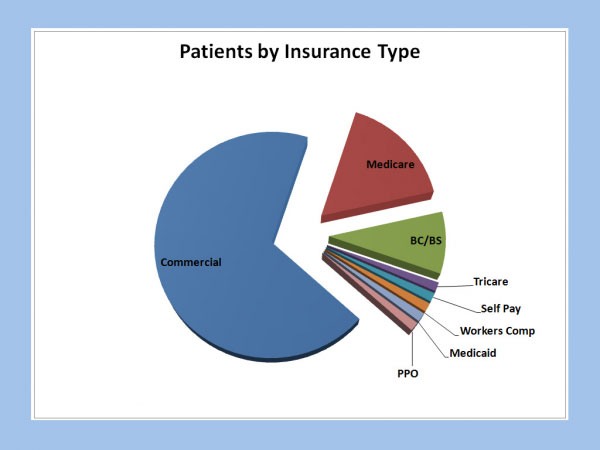
Example revenue report from Kareo, a solution for many practice types including (SLPs)
But speech pathologists have unique needs of their own, as well. They usually have complex documentation management needs, and may want to cater to various American Speech-Language-Hearing Association (ASHA) recommendations.
Additionally, each individual practice will have its own requirements. Some will need a full-fledged electronic medical records (EMR) system for clinical documentation and support. Some will need practice management functions, such as appointment scheduling and medical billing. And some practices may need both speech therapy EMR software and speech therapy practice management software. In this guide, we outline some important considerations for SLPs evaluating software options.
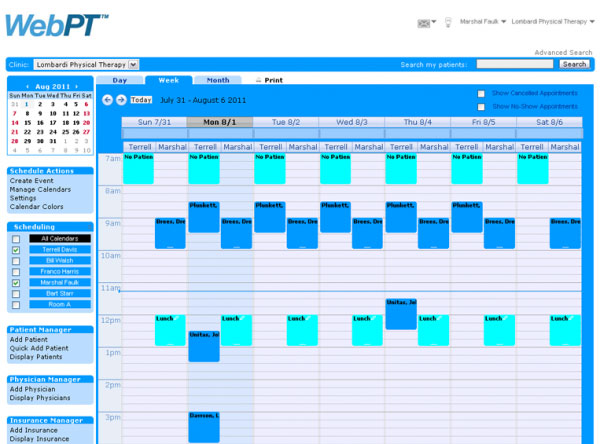
The patient scheduler of WebPT, a therapy-centric software that offers speech therapy solutions
Evaluating Speech Therapy Software
Here are some important features to consider when evaluating software for speech therapy:
Document management | Speech therapy practices typically need to manage a high volume of documentation. You’ll want software that can store and manage all of your forms. |
Speech therapy CPT & ICD coding | The software should be able to reference current CPT and ICD code sets. Some software will even allow users to select “favorite” codes for frequent procedures or exams so that they can be pulled up quickly; other systems may suggest codes automatically. |
Speech therapy-specific templates | Many EMR systems will include templates specifically designed to help SLPs record their most typical evaluations. Examples include templates for various types of swallowing exams, voice exams and language/cognitive communication exams. |
Speech therapy-specific lists | Some EMR systems offer custom lists for lab orders, procedure orders and radiology orders. |
PQRS support | SLP practices can avoid penalties on Medicare Part B payments by reporting Medicare Physician Quality Reporting System (PQRS) measures. Some software will include preloaded G-codes and modifiers to help automate this PQRS reporting. |
Certain practice management systems are also tailored to speech therapy and rehabilitation contexts via custom workflows.
Not every software solution will include all of these features, and you may not need all of them (or you may need some to a greater or lesser degree than others). Your practice should identify the features most important to you before you begin evaluating software.
One important consideration to note is that the features we list above are designed to assist providers with record-keeping, scheduling, billing and other tasks. There are also speech therapy solutions on the market for patient usage. This category of software helps patients to practice at home with guided drills, and is particularly prevalent in the treatment of aphasia, stroke and similar disorders. While this buyer’s guide covers solutions for provider usage, we’ve done a comprehensive report on speech therapy software for patient drills.
Important Considerations
Aside from the speech therapy-specific features of the software you evaluate, you’ll want to weigh some additional factors, such as:
Integration requirements. In the realm of speech therapy software, some practices may need an EMR, others may need speech therapy scheduling software and still others may need a medical billing solution—and many practices need all of the above. One such application by itself is called a “standalone” or “best-of-breed” system. Conversely, software that integrates multiple applications in one package is known as an “integrated suite.”
Integrated suites offer both practice management functionality (scheduling, billing, patient portals etc.) and an integrated EMR system. Alternatively, you can look for a standalone EMR system that’s tailored to the needs of speech therapists. Nearly all speech therapy solutions designed for patient usage are sold on a standalone basis.
Most of the practices we talk to are looking for integrated suites (both EMR and practice management). However, there are a couple of scenarios in which you might want to consider a standalone application:
If you currently outsource your billing and don’t plan to bring it in-house, you wouldn’t need your own speech therapy billing software program.
If you have a solution in place for one application that you don’t want to replace, but using that same vendor for another application isn’t an option (for example, if the vendor doesn’t offer it), you may want a best-of-breed solution for that other application.
You need software that supports guided drills so that patients can get additional practice, since this functionality isn’t included in either EMR or practice management systems.
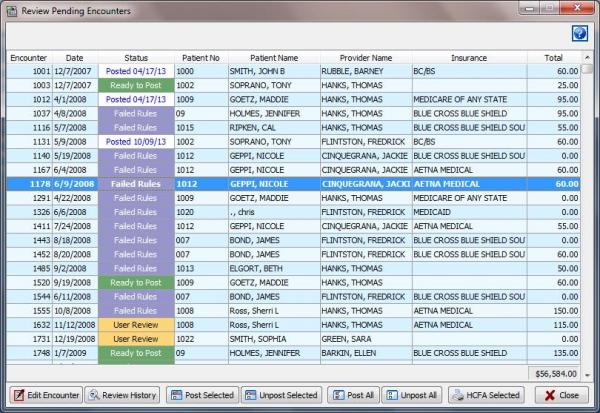
The claim control center of CGM DAQbilling software, an integrated billing and scheduling solution
Software as a Service (SaaS). SaaS solutions—also known as “cloud-based” or “Web-based” solutions—are those which are deployed online and typically accessed through a Web browser. This is in contrast to an “on-premise” solution, which is installed locally on a practice’s own servers.
On-premise solutions typically require a larger upfront investment in hardware and installation, as well as payment of an upfront license fee (to own and operate the software). Web-based solutions usually come with a lower upfront investment, but are priced under a recurring monthly subscription fee, such that over the life of the software the costs of the two deployment models tend to converge.
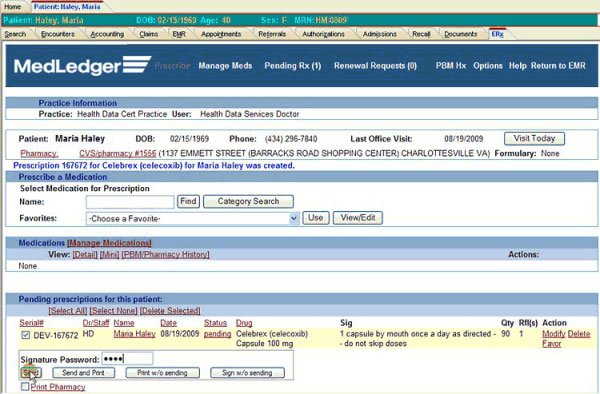
The ePrescribing screen of the MedLedger EHR, a Web-based system
Advantages of on-premise solutions include direct control over the software system and how it is accessed, since it’s hosted at your physical location. Advantages of Web-based solutions include easy remote access (since the system can be accessed over the Internet), data recovery in case of physical damage to your office or computers and, typically, instantaneous updates (since updates don’t have to be installed on your servers each time). For more information on Web-based systems, check out our Web-based EMR buyer’s guide.
Mobile support. Mobile support refers to the ability to easily access and use your software on a mobile device, such as a tablet or smartphone. This may be especially important for speech pathologists who visit client homes and wish to document exams at the point of care.
As more and more medical practitioners use mobile devices professionally, software vendors are increasingly developing mobile apps. If you want speech therapy software for your iPad or iPhone, be sure to ask the vendors you evaluate whether they offer mobile support. Remember that even though Web-based systems will usually be accessible via the Web browser of a mobile device, you’ll still want an app designed especially for use on a tablet or smartphone. (Otherwise, you’ll be accessing an interface designed for a desktop screen, which may be unwieldy on a smaller screen.)
Check out our tablet EMR guide or our Mac EMR guide for more details on mobile support.