


Best eCommerce Software of 2026
Updated March 18, 2026 at 2:21 PM

Written by Supriya Deka
Market Research Specialist

Edited by Parul Sharma
Editor
- Popular Comparisons
- FrontRunners
- Buyers Guide
Compare Products
Showing 1 - 25 of 676 products
Compare Products
Sort by
Reviews: Sorts listings by the number of user reviews we have published, greatest to least.
Average Rating: Sorts listings by overall star rating based on user reviews, highest to lowest.
Alphabetically (A-Z): Sorts listings by product name from A to Z.

Linnworks is an all-in-one eCommerce inventory and order management solution. The platform provides a centralized system to mana...Read more about Linnworks


Linnworks's Best Rated Features
See All
Linnworks's Worst Rated Features
See All

DigitBridge is a digital commerce operations system designed specifically for small-to-medium sized businesses (SMBs). DigitBr...Read more about DigitBridge


Drupal Commerce is an open-source eCommerce platform that lets you sell any type of product to anyone in the world. It powers bi...Read more about Drupal Commerce

Extensiv Order Manager powers order fulfillment, inventory operations, and business intelligence for brands and retailers lookin...Read more about Extensiv Order Management

Extensiv Order Management's Best Rated Features
See All
Extensiv Order Management's Worst Rated Features
See All

Blue Meteor Product Content Cloud (PCC) configurable and composable solutions include everything required to uncomplicate produc...Read more about Bluemeteor Product Content Cloud


MarketStudio enables organizations to deploy a customized e-commerce online store or product catalog solution. The solution is s...Read more about MarketStudio


RETISIO is an enterprise-class, cloud-native, reactive microservices eCommerce platform. You can create compelling customer exp...Read more about RETISIO


At Wave Grocery, we recognize that not all businesses have the technical expertise to navigate the complexities of e-commerce. T...Read more about Wave Grocery


Inventory Planner is a software solution that helps businesses manage and plan their inventory to minimize overstocking or out-o...Read more about Inventory Planner

Inventory Planner's Best Rated Features
See All
Inventory Planner's Worst Rated Features
See All

ShippingEasy is a cloud-based shipping and inventory management solution suitable for small to midsize e-commerce businesses. Ke...Read more about ShippingEasy
ShippingEasy's Best Rated Features
See All
ShippingEasy's Worst Rated Features
See All

MemberPress is a WordPress membership plugin designed to help businesses sell online courses, accept credit cards safely, sell d...Read more about MemberPress

MemberPress's Best Rated Features
See All
MemberPress's Worst Rated Features
See All

Beeketing is an artificial intelligence (AI)-enabled marketing automation platform designed to help businesses track customers' ...Read more about Beeketing


Shopper Approved is a cloud-based solution that allows businesses to collect, manage and actively promote reviews and ratings fr...Read more about Shopper Approved
Shopper Approved's Best Rated Features
See All
Shopper Approved's Worst Rated Features
See All

Subbly is a web-based subscription eCommerce platform designed to help businesses build websites, enhance marketing automation, ...Read more about Subbly
Subbly's Best Rated Features
See All
Subbly's Worst Rated Features
See All

Pixpa’s all-in-one platform enables photographers, designers and creative businesses to create stunning, professional websites e...Read more about Pixpa

Pixpa's Best Rated Features
See All
Pixpa's Worst Rated Features
See All

Rocketspark is an eCommerce software designed to help businesses in construction, tourism, education, retail, automotive and oth...Read more about Rocketspark
Rocketspark's Best Rated Features
See All
Rocketspark's Worst Rated Features
See All

Mergado is a platform for managing and optimizing product data across more than 650 marketing channels. It helps online stores...Read more about Mergado


Mergado's Best Rated Features
See All
Mergado's Worst Rated Features
See All

TargetBay is an email marketing platform that makes it easy for businesses to send targeted email messages to their customers an...Read more about TargetBay

TargetBay's Best Rated Features
See All
TargetBay's Worst Rated Features
See All

Build high-converting pages, test smarter, and turn more visitors into customers with powerful visual editing and A/B testing to...Read more about Shogun
Shogun's Best Rated Features
See All
Shogun's Worst Rated Features
See All

Format is a web-based portfolio-building platform that combines the capabilities of cloud storage, client proofing, and portfoli...Read more about Format

Rejoiner is a cloud-based email marketing solution designed for e-commerce companies and online retailers. The product helps use...Read more about Rejoiner

LearnWorlds is a learning management system (LMS) designed for organizations and creators who want to run online learning as a s...Read more about LearnWorlds
LearnWorlds's Best Rated Features
See All
LearnWorlds's Worst Rated Features
See All

Finale Inventory helps to optimize inventory and warehouse workflows for growing sellers. Our software is Intuitive so that anyo...Read more about Finale Inventory

Finale Inventory's Best Rated Features
See All
Finale Inventory's Worst Rated Features
See All

Do more of what you love and share it with the world. Create your custom landing page, link in bio, website, or online store wit...Read more about PageCloud


Revi is a review management platform for online shops. Users are able to leave a verified product and/or customer service experi...Read more about Revi
Popular Comparisons



Your Guide to Top eCommerce Software, April 2025
Software Advice uses reviews from real software users to highlight the top-rated eCommerce products in North America.
Learn how products are chosenExplore FrontRunners


“Usability” includes user ratings for Functionality and Ease of Use.
“Customer Satisfaction” includes user ratings for Customer Support, Likelihood to Recommend and Value for Money.
Reviews analysis period: The reviews analysis period spans two years and ends the 15th of the month prior to publication.
Buyers Guide
This detailed guide will help you find and buy the right ecommerce software for you and your business.
Last Updated on April 24, 2025Businesses from startups to huge brands need to have an online store or marketplace that can help them reach a wide pool of customers. As customers increasingly rely on the internet to research, browse, shop, and purchase online, you need to shift your focus to an online ecommerce store.
Ecommerce software helps you build your online store to sell products and let consumers shop from the comfort of their home or while they are on the go.. This helps generate sales around the clock and also allows your business to respond to customer queries faster through 24/7 customer support options such as live chat, chatbots, or a knowledge base. This results in improved customer service, retention, and loyalty.
Ecommerce software can be implemented in the cloud or on-premise. These tools typically integrate with payment processing software, customer relationship management (CRM) software, customer service tools, and web content management systems to provide an all-in-one system to manage your website and serve your customers better.
There are many ecommerce platforms available on the market, so choosing the right one can be challenging. In this buyers guide, we provide all the information you need to choose the best ecommerce platform for your business.
Here’s what we’ll cover:
What is ecommerce software?
Ecommerce software helps users create websites to sell products, manage inventory, and accept and process payments.
Ecommerce software is very similar to (shopping cart software)—they both help businesses run and manage online store/sites, but they differ in specific functionalities.
Ecommerce software includes website design and hosting, payment processing, marketing, and merchant tools. These tools can be used to create a website from scratch or integrate with existing websites or blogs, and have built-in shopping cart tools.
Shopping cart software, on the other hand, is useful only when the business already has a website and only needs to list their products and services and process payments.
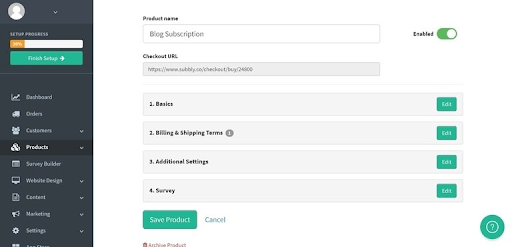
Website management in Subbly Software (Source)
Common features of ecommerce software
Cataloging/categorization | Create, organize, and manage a digital catalog of products/services including details, specifications, and price. |
Organize, track, monitor, and fulfill customer orders for goods and services. The process begins when an order is placed and ends when the customer receives their package. | |
Facilitate the purchase of a product or service online. This feature allows customers to store selected products, accepts their payments, and distributes that information to the merchant, payment processor, and other parties. | |
Website management | Build, host, and monitor your website. You can also integrate the software with your existing site in order to monitor, optimize, and secure it. |
Manage customer lifecycles by storing all crucial information for customers including name, contact details, and purchase history. | |
Create and send commercial messages and campaigns via email to a group of potential or existing customers to promote products and services. | |
Track and manage available inventory. The software helps you track which products are overstocked, in stock, understocked, and out of stock. | |
Organize and track orders being sent and delivered to customers. | |
Improve the visibility of your website in relevant search engine results pages such as Google, Bing, and Yahoo. | |
Multi-channel marketing | Interact with customers using a combination of indirect and direct communication channels such as emails, landing pages, and mobile. |
What type of buyer are you?
The majority of buyers belong to the following categories:
Business-to-consumer (B2C) buyers: Buyers in this category cater to individual consumers. The sales process is focused on the needs of a single customer and generally has a smaller order size at lower prices. These buyers need a tool that can help them acquire more customers, provide personalization capabilities to enhance the customer experience, and get insights about customer behavior.
If you are this type of buyer, you should look for an ecommerce platform that provides built-in SEO tools and marketing capabilities, analytics, content management to handle the information the seller or manufacturer wants to convey to the customers, product catalogs, and instant support such as live chat features.These features will help your business reach a wider target market and also provide customer satisfaction.
Business-to-business (B2B) buyers: Buyers in this category cater solely to other businesses. They typically sell in large quantities and at higher price points to other companies.
If you are B2B business, you should opt for a tool with features such as intelligent search solutions, order tracking, secure and flexible payment options, real-time inventory management, and customer support functionalities. Unlike B2C businesses that compete with low prices, B2B businesses tend to withhold their pricing strategies from the public. You should look for a tool that provides you the ability to grant access to products’ pricing information to approved customers only.
Benefits of ecommerce software
Let’s take a look at the benefits of using an ecommerce platform:
Enhanced customer service: Website hosting services provided by ecommerce software solutions can help you create and host a website with features that will make online shopping experience easier for your customers. By listing all your products on your online site, you can make it easier for your customers to browse and compare products, along with a faster checkout process. Additionally, order fulfillment and shipping statuses can be tracked at any time.
Save money: Running an online store is less expensive than a brick-and-mortar store–there are fewer operating costs for an online store than a physical store that requires you to rent or buy space and pay employees to staff the location.
Improved efficiency: Ecommerce software helps increase efficiency as it automates manual processes such as creating, categorizing, and organizing new product listings. Whether you need to calculate taxes, print a shipping label, or track an order, an ecommerce platform can take care of all this. This helps improve productivity and efficiency of your employees as you can serve your customers faster.
Key considerations
Deployment method: A cloud-based ecommerce software solution has lower maintenance costs compared to an on-premise solution, as everything is stored in the cloud and taken care of by the service provider. Moreover, choosing cloud software will provide the flexibility to meet the needs of seasonal, or hourly promotional spikes in traffic on your shopping site. A cloud-based solution can easily scale up or down to support the actual needs of your business.
Mobile access: An ecommerce site with a mobile app or that is designed for mobile access can help customers easily browse and compare products, check product availability, find discounts, and order from anywhere. When evaluating ecommerce software, select software that provides platforms to design and build mobile-ready solutions for your business.
Third-party integrations: The main goal of ecommerce software is to support the work of your website and increase the operational efficiency of your business. In order to do so, you need to integrate your platforms to share data for better visibility into your revenue generation and other business operations. Make sure the ecommerce software solution you choose integrates with the existing platforms in your business such as enterprise resource planning, accounting software, inventory management software, client management, marketing tools, and SEO tools.
Market trends to understand
Here’s a ecommerce software market trend to keep in mind when making your purchase:
Augmented reality (AR) in ecommerce will enhance shopping experiences. As customers want to shop from the comfort of their homes, retailers and ecommerce sites are looking to give them a more store-like feel to enhance their shopping experience. Ecommerce platforms are offering augmented reality functionalities through their solution. Using augmented reality on their website, businesses can provide 3D views of their products to show what it would look like in a user’s space, making it much easier to make a buying decision. For example, shoppers can view furniture in their homes, and try on sneakers and clothes from their home.
Note: The application selected in this article is an example to show a feature in context and is not intended as an endorsement or recommendation. It has been obtained from sources believed to be reliable at the time of publication.