


Best Supply Chain Management software of 2026: which is right for you?

- Popular Comparisons
- FrontRunners
- Buyers Guide
Compare Products
Showing 1 - 25 of 546 products
Compare Products
Sort by
Reviews: Sorts listings by the number of user reviews we have published, greatest to least.
Average Rating: Sorts listings by overall star rating based on user reviews, highest to lowest.
Alphabetically (A-Z): Sorts listings by product name from A to Z.

AWS Supply Chain is a cloud-based application designed for supply chain management. It unifies data and provides machine learnin...Read more about AWS Supply Chain

Focus X is an all-inclusive enterprise resource planning (ERP) system that helps you connect every aspect of your business opera...Read more about Focus X
Focus X's Best Rated Features
See All
Focus X's Worst Rated Features
See All

Extensiv 3PL Warehouse Manager is a cloud-based warehouse management system designed for third-party logistics companies to mana...Read more about 3PL Warehouse Manager


3PL Warehouse Manager's Best Rated Features
See All
3PL Warehouse Manager's Worst Rated Features
See All

Item is a cloud-based solution that streamlines supply chain, order, and warehouse management. Real-time visibility is at the co...Read more about Item

Item's Best Rated Features
See All
Item's Worst Rated Features
See All

Kuebix is a cloud-based transportation management system (TMS) designed for shippers and carriers involved in both inbound and o...Read more about Kuebix TMS


Tai TMS is an all-in-one platform for quoting, booking, and tracking shipments. Tai TMS focuses on helping freight brokers grow ...Read more about Tai TMS


Tai TMS's Best Rated Features
See All
Tai TMS's Worst Rated Features
See All

SAP S/4HANA Cloud is a cloud-based and on-premise enterprise resource planning (ERP) solution. It is suitable for small, midsize...Read more about SAP S/4HANA Cloud


SAP S/4HANA Cloud's Best Rated Features
See All
SAP S/4HANA Cloud's Worst Rated Features
See All
FreightPOP is a cloud-based AI supply chain software platform that unifies Order Management (OMS), Warehouse Management (WMS), a...Read more about FreightPOP

FreightPOP's Best Rated Features
See All
FreightPOP's Worst Rated Features
See All

Infios Warehouse Management System (WMS) is a mobile-enabled solution designed to help businesses manage processes, inventories,...Read more about Infios Warehouse Management Systems

The CoreIMS Inventory Management System (CoreIMS™) is a cost-effective inventory management system that provides flexibili...Read more about CoreIMS


NetSuite is an AI-powered cloud-based business management suite that incorporates ERP, financial management, CRM and eCommerce f...Read more about NetSuite


NetSuite's Best Rated Features
See All
NetSuite's Worst Rated Features
See All

Tecsys’ Elite™ provides a series of cloud-based supply chain management solutions suitable for midsize to large distribution com...Read more about Tecsys Elite


WISE is a cloud-based warehouse management system. It is designed to enhance business processes. This comprehensive solution is ...Read more about WISE


Enterprise WMS and Interchange EDI by Ramp Systems is a warehouse management system (WMS) that provides tools for both asset-bas...Read more about Ramp Enterprise WMS
Ramp Enterprise WMS's Best Rated Features
See All
Ramp Enterprise WMS's Worst Rated Features
See All

RF-SMART is a cloud-based inventory management solution designed to help businesses using Oracle NetSuite, Oracle SCM Cloud, Mic...Read more about RF-SMART WMS

RF-SMART WMS's Best Rated Features
See All
RF-SMART WMS's Worst Rated Features
See All

Logiwa IO is a cloud-native warehouse management and order fulfillment solution built on a .NET framework. The solution supports...Read more about Logiwa

Logiwa's Best Rated Features
See All
Logiwa's Worst Rated Features
See All

Shipedge is a cloud-based platform designed to manage orders, inventory, shipping, and logistics through a centralized system. I...Read more about Shipedge
Shipedge's Best Rated Features
See All
Shipedge's Worst Rated Features
See All

Cin7 Omni is a highly configurable inventory management and order management solution with built-in EDI and integrations to all ...Read more about Cin7 Omni

Cin7 Omni's Best Rated Features
See All
Cin7 Omni's Worst Rated Features
See All

At ShipHawk, we’re dedicated to improving and automating the world behind the buy button for growing companies. The reality toda...Read more about ShipHawk
ShipHawk's Best Rated Features
See All
ShipHawk's Worst Rated Features
See All

Da Vinci is a cloud-based supply chain management (SCM) solution designed specifically for 3PLs, internet retailers and wholesal...Read more about Da Vinci Supply Chain Business Suite

Legacy warehouse management systems were designed at a time when e-commerce represented a small percentage of total revenue. As ...Read more about Tecsys Omni WMS
No reviews yet
recommendations

Sage X3 is a powerful ERP software solution designed for midsized national and global manufacturers, distributors, and after-sal...Read more about Sage X3


Sage X3's Best Rated Features
See All
Sage X3's Worst Rated Features
See All

CobbleStone Contract Insight is an enterprise contract management system designed to automate and centralize contracts, agreemen...Read more about CobbleStone Contract Insight

CobbleStone Contract Insight's Best Rated Features
See All
CobbleStone Contract Insight's Worst Rated Features
See All

Mecalux Easy WMS is a warehouse management solution that helps e-commerce manufacturers, distributors, and third-party logistics...Read more about Easy WMS
Easy WMS's Best Rated Features
See All
Easy WMS's Worst Rated Features
See All

MyCarrier was formed, inspired, and driven by the shipping and logistics digital innovation possibilities. We aspire to be the u...Read more about MyCarrierTMS
MyCarrierTMS's Best Rated Features
See All
MyCarrierTMS's Worst Rated Features
See All
Popular Comparisons



Your Guide to Top Supply Chain Management Software, August 2025
Software Advice uses reviews from real software users to highlight the top-rated Supply Chain Management products in North America.
Learn how products are chosenExplore FrontRunners


“Usability” includes user ratings for Functionality and Ease of Use.
“Customer Satisfaction” includes user ratings for Customer Support, Likelihood to Recommend and Value for Money.
Reviews analysis period: The reviews analysis period spans two years and ends the 15th of the month prior to publication.

Buyers Guide
This detailed guide will help you find and buy the right supply chain management software for you and your business.
Last Updated on January 27, 2025While the supply chain management software market is relatively small (compared to many other markets), the vast disparity in functionality between different SCM programs makes buying decisions much more complicated. Some programs concentrate on business intelligence, others focus on inventory control or transportation management and there are full-suite systems that do all of the above and more. This buyer’s guide is designed to identify the features associated with supply chain management systems to help navigate the selection process.
Here's what we'll cover:
Common Features of SCM Software
What Is SCM Supply Chain Management Software?
Supply chain software is a software program or module designed to control end-to-end business processes across the supply chain, perform demand planning and forecasting, and manage supplier relationships. While functionality in these systems varies tremendously, common features include:
Execution-focused applications (e.g., warehouse and transportation management)
Many supply chain management systems include forecasting, which helps companies manage the fluctuations in supply and demand by using sophisticated algorithms and consumption analysis to evaluate buyer histories. Supply chain optimization software can be an invaluable tool in maximizing production efficiency and planning for the future.
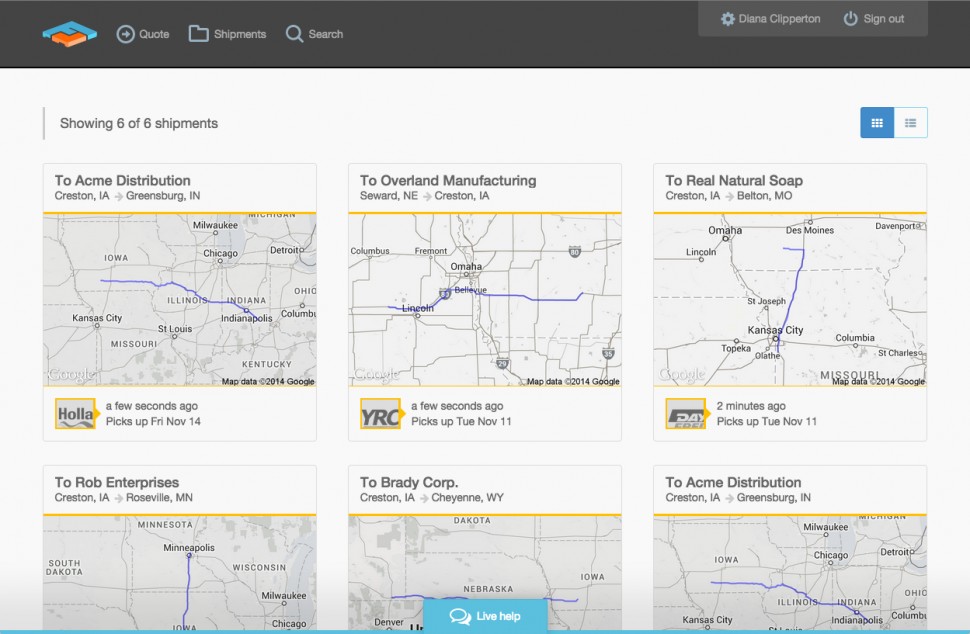
Screenshot of Freightview shipment overview dashboard
Common Features of SCM Software
Supply chain planning | Planning systems are used to forecast customer demand and adjust the speed and flow of production accordingly. Simulated demand estimates are run using historical trend data and planned promotion schedules to determine how changes in market awareness will affect your organization's inventory requirements in the future. Example vendors include InStyle ERP, SCP 4.0, VISION SCM and Clever. |
Demand planning software improves the accuracy of potential demand forecasts by reducing biases in the data and providing that data to your organization in real-time. Multi-dimensional forecasting allows users to view information through a variety of different filters—by market, time or customer—and run a series of "what if" simulations to project future demand. Example vendors include Microsoft Dynamics, Geneva BMS, Fishbowl Inventory and SAP. | |
Vendor managed inventory | Vendor managed inventory (VMI) systems give suppliers the ability to monitor and replenish the buyer's inventory themselves. Various communication options—such as XML, Web portals and email—help multiple business partners increase visibility. Buyers can automate sold inventory reports, and suppliers respond with new shipment notifications and invoices. Example vendors include Datalliance VMI, RedPrairie, SAP and Aravo. |
Buyers use supplier relationship solutions to monitor the performance of their suppliers. Users can assess supplier risk through user-defined risk categories. Performance analyses utilize key performance indicators (KPI) and audit trails to monitor spend and supplier performance. The software also helps users keep track of their suppliers' regulatory compliance. Example vendors include R.Portal, Geneva BMS, Fishbowl Inventory and S2K. Businesses likely to scale might also be looking for a system with more complexity such as vendor management systems. | |
Procurement software carries out purchase orders and maintains the financial side of supplier/customer relationships. Purchasing terms are distributed electronically throughout the organization for instant approval, and expenses are logged for future reference in the next sourcing cycle. As the accounting segment of SCM systems, procurement also handles reporting and compliance issues. Example vendors include Coupa, SphereWMS, Microsoft Dynamics and WISE. | |
Sourcing software is used before the procurement process to establish cost-cutting goals and to pre-screen potential vendors. Spend analysis pinpoints unnecessary costly supplier relationships by comparing current spend to other market options. Buyers can submit e-RFx, electronic requests for x (quotes, proposals and other information), to potential vendors to gather data for making informed purchases. Example vendors include ShippersEdge, Aravo, Epicor and Lawson. | |
WMS systems monitor and control the movement of materials within the warehouse. Shipping and receiving events are controlled with advanced shipment notifications, and picking and putaway are tracked using tools like auto ID data capture (AIDC) and radio-frequency identification (RFID). WMS software also assists with the design of warehouse infrastructure. Third party logistics companies should review our 3PL software guide for a list of systems tailored for 3PL. Example vendors include SphereWMS, WISE, HighJump Warehouse Advantage, Manhattan Associates and RedPrairie. | |
TMS software guides the movement of materials to and from the warehouse. Logistics software can suggest the most efficient delivery modalities (air, land, sea) and manages multiple delivery variations like heterogenous vehicle fleets and load splitting constraints. Deliveries are monitored using satcomm and other communication devices. Land-based fleets should review our fleet management software guide for the top trucking, dispatch and routing software as well as systems to manage overall operations. | |
This software helps supply chain managers decrease lead times on production orders, resulting in smooth quote to cash processes. The system can determine whether build-to-order (BTO) or engineer-to-order (ETO) is the best solution for each product. After order completion, order fulfillment software keeps track of unpaid orders through revenue recognition processes.Order fulfillment applications are often bundled in to broader order management systems. Example vendors include SphereWMS, ShipppersEdge and ShipSoft. |
What Type of Buyer Are You?
Third party logistics. Companies that manage the ordering, warehousing and transportation of supplies for another business need a robust solution that can handle the data and processes for lots of different companies. These supply chain management tools will include lot tracking, customer profiling, supply management and order fulfillment.
Manufacturing. Manufacturing software needs to be able to track suppliers, costs and customers. This is where features like collaboration, demand planning and strategic sourcing are most likely to be used.
Distribution. Distributors sit in the middle, connecting manufacturers to retailers and/or consumers. Distributors need to track products and terms for multiple suppliers and customers, and have robust inventory and transportation capabilities in order to ensure the products get to the right person at the right time. Freight brokers and forwarders also fit into this category, and they typically rely on specialized software that facilitates daily freight operations.
Retailers. Brick and mortar retailers will want to consider dedicated retail software, but phone—and Internet—order retailers function more like distributors. These buyers will need warehouse and transportation solutions, inventory control and possibly additional strategic/planning modules, particularly for the larger/volume-based retailers.
Market Trends to Understand
Online purchases. Over the last decade, online retail sales have exploded, and with them the need for effective warehousing, inventory and transportation control. Suppliers, more often than not, are taking a product from manufacturing not to a store, but to a warehouse where it is stored and ultimately sent directly to the consumer. Ensuring an effective inventory control path is absolutely critical throughout this process.
Software as a service (SaaS). Cloud-based software—that is, software that’s hosted by the vendor and accessed through a Web browser rather than being installed on a local computer—has been adopted by most industries to a large extent. SCM technology has been a little slower to adopt this trend, with major players like Microsoft, Geneva Systems, WISE and Fishbowl yet to develop Web-based systems. But as the technology improves, more and more supply chain management software providers will offer Web-based applications, with its benefits of collaborative networks and online purchasing integration. Currently, S2K and SAP are the biggest SaaS contenders.
Eco-friendly logistics. With environmental consciousness at an all-time high, consumers are beginning to think about logistics when it comes to purchasing their products. This trend is most noticeable in the food industry, where grocery stores and restaurants are beginning to brand and market products under a banner of being “locally sourced.” As transportation from suppliers is the easiest place for a manufacturer to cut its carbon footprint, buyers may want to look out for a program’s ability to identify suppliers based on proximity or other green factors.
Improving business intelligence. More and more companies want to know how their business spends money, so sophistication of planning, demand planning and strategic sourcing capabilities will only grow in an effort to meet the demand.
Increased demand for labor management. Companies using SCM software to track their inventory are now turning their attention toward labor optimization and the ability to manage each worker more efficiently. These systems can create a list of tasks for a worker so he can complete multiple types of work in one trip.
Benefits of SCM Software
The benefits of supply management software are considerable:
Increased efficiency. First and foremost, SCM software is designed to improve the efficiency of your operation, from inventory check-in and storage to distribution and transportation. By making the processes electronic and/or automated, the time spent on these tasks drops considerably, which allows you to send more products out faster.
Reduced costs. The resulting efficiency reduces labor costs. In addition, many of the intelligence features are specifically designed to identify cost waste and eliminate it—for example, where commodities can be procured at lower rates, how to combine shipping to reduce to transportation costs or where to reduce inventory to maximize storage capacity.
Trend analysis and business intelligence. The intelligence features, in addition to helping control costs, can help improve revenues by identifying strongly performing products and guiding the user toward meeting market demand.
While these supply chain solutions do come at a price, proper implementation will usually lead to a calculable return on investment within a year.