


Best Mobile EHR Software of 2026
Updated January 27, 2025 at 9:58 AM
- Popular Comparisons
- Buyers Guide
Compare Products
Showing 1 - 25 of 302 products
Compare Products
Sort by
Reviews: Sorts listings by the number of user reviews we have published, greatest to least.
Average Rating: Sorts listings by overall star rating based on user reviews, highest to lowest.
Alphabetically (A-Z): Sorts listings by product name from A to Z.

The AdvancedMD EHR Software offers a comprehensive Electronic Medical Record (EMR) service designed to streamline and optimize v...Read more about AdvancedMD EHR
AdvancedMD EHR's Best Rated Features
See All
AdvancedMD EHR's Worst Rated Features
See All

CharmHealth is a comprehensive suite of healthcare solutions designed to streamline practice management, revenue cycle managemen...Read more about CharmHealth
CharmHealth's Best Rated Features
See All
CharmHealth's Worst Rated Features
See All

RXNT’s cloud-based, ONC-certified medical software—Billing, Practice Management, EHR, and more—improves clinical outcomes & reve...Read more about RXNT
RXNT's Best Rated Features
See All
RXNT's Worst Rated Features
See All

athenaOne is an integrated solution designed for healthcare practices, offering electronic health records, revenue cycle managem...Read more about athenaOne
athenaOne's Best Rated Features
See All
athenaOne's Worst Rated Features
See All

AestheticsPro is an all-in-one, cloud-based software platform built exclusively for medical spas, wellness centers, and aestheti...Read more about AestheticsPro
AestheticsPro's Best Rated Features
See All
AestheticsPro's Worst Rated Features
See All

Nextech is redefining what’s possible in specialty healthcare. As an award-winning technology partner for specialty practices an...Read more about Nextech EHR & PM
Nextech EHR & PM's Best Rated Features
See All
Nextech EHR & PM's Worst Rated Features
See All

PatientNow is an EMR practice management software designed for aesthetic and wellness providers. It supports various specialties...Read more about PatientNow
PatientNow's Best Rated Features
See All
PatientNow's Worst Rated Features
See All

Elation Health is the most trusted technology platform for high-value primary care. Since 2010, the company has delivered clinic...Read more about Elation
Elation's Best Rated Features
See All
Elation's Worst Rated Features
See All

NextGen® Office is an all-in-one, cloud-based support system designed to help independent practices improve clinical outcomes, i...Read more about NextGen Office
NextGen Office's Best Rated Features
See All
NextGen Office's Worst Rated Features
See All

AdvancedMD is a medical office software suite with cloud-based, integrated physician-patient workflow solutions including: pract...Read more about AdvancedMD Billing Services

Valant EHR Suite is an electronic health record system designed for behavioral health practices. It supports clinical documentat...Read more about Valant EHR Suite
Valant EHR Suite's Best Rated Features
See All
Valant EHR Suite's Worst Rated Features
See All

ReLi Med Solutions' suite gives small to midsize ambulatory care practices a completely integrated EHR and Practice Management s...Read more about ReLiMed

AllegianceMD is a cloud-based medical software system that is designed to serve the needs of small and midsize practices, as wel...Read more about AllegianceMD

ZENOTI is a cloud-based business solution used by spas, salons, med spas, yoga, and fitness studios of all sizes. Business featu...Read more about ZENOTI
ZENOTI's Best Rated Features
See All
ZENOTI's Worst Rated Features
See All

RevolutionEHR is a cloud-based electronic health record (EHR) solution built specifically for optometry practices. RevolutionEHR...Read more about RevolutionEHR
RevolutionEHR's Best Rated Features
See All
RevolutionEHR's Worst Rated Features
See All

TotalMD is an extremely affordable, extremely intuitive Practice Management solution that offers small and growing practices the...Read more about TotalMD
TotalMD's Best Rated Features
See All
TotalMD's Worst Rated Features
See All

IMS (Intelligent Medical Software) by Meditab Software is an Electronic Health Records (EHR) and Practice Management solution th...Read more about Intelligent Medical Software

TheraOffice is an integrated physical therapy EMR software that seamlessly manages patient intake, scheduling, documentation, bi...Read more about TheraOffice

Advanced Data Systems provides healthcare software designed to streamline clinical and administrative workflows for various medi...Read more about Advanced Data Systems
Advanced Data Systems's Best Rated Features
See All
Advanced Data Systems's Worst Rated Features
See All

Compulink Advantage is an all-in-one EHR and Practice Management solution for specialty practices such as optometry, ophthalmolo...Read more about Compulink Healthcare Solutions
Compulink Healthcare Solutions's Best Rated Features
See All
Compulink Healthcare Solutions's Worst Rated Features
See All

Harmony e/Notes is a hybrid integrated solution that offers functionalities for electronic medical records, practice management,...Read more about HARMONY Medical
HARMONY Medical's Best Rated Features
See All
HARMONY Medical's Worst Rated Features
See All

ModMed is a cloud-based electronic health record (EHR) and practice management system designed for specialty medical practices. ...Read more about ModMed
ModMed's Best Rated Features
See All
ModMed's Worst Rated Features
See All

ChiroTouch is the leading all-in-one chiropractic EHR and practice management software, trusted by over 12,500 practices across ...Read more about ChiroTouch
ChiroTouch's Best Rated Features
See All
ChiroTouch's Worst Rated Features
See All

StrataPT combines your EMR & Billing into one automated system to achieve a 99.99% reimbursement rate for PT, OT and Speech Clin...Read more about StrataPT
StrataPT's Best Rated Features
See All
StrataPT's Worst Rated Features
See All

NextGen Healthcare provides ambulatory practices of all sizes award-winning solutions along with dedicated support and professio...Read more about NextGen Enterprise
NextGen Enterprise's Best Rated Features
See All
NextGen Enterprise's Worst Rated Features
See All
Popular Comparisons


Buyers Guide
This detailed guide will help you find and buy the right mobile ehr software for you and your business.
Last Updated on January 27, 2025Digitalization is an industry-spanning paradigm shift that's transforming how business is conducted and how businesses operate. And hospitals and other medical practices are not exempt from this change.
Advances and increased accessibility to electronic health records (EHR) has given you and your peers a clear path to ride the wave of digitalization to operational excellence, improved patient experiences and overall financial success.
But not all mobile EHR software is created equal. So we've put together this guide to help you determine the must-have capabilities for your new system. You can also read through some key benefits of adopting a mobile EHR and home in on the features enabling the benefits most important to you. Use this guide as a starting point to ensure you choose the right software for your operations.
In this guide, we'll cover:
Common Features of Mobile EHR Software
Benefits of Adopting Mobile EHR Software
Market Trends to Understand in Mobile EHR Software
What Is Mobile EHR Software?
Electronic health records software (and its sister technology, electronic medical records software) are digital records management tools. Mobile-based EHR software simply implies these capabilities are available across various connected, authorized and secured devices. They provide all the functionality of EHR tools on mobile devices.
These systems provide digital documentation and patient information tools for recording, storing, analyzing and sharing basic and detailed patient information across practices.
The sharing across practices of information is a key capability of EHR software. It's also what differentiates these systems from their electronic medical records sibling systems. The two are essentially the same thing (and vendors will use the terms interchangeably), but EHR comes with the added benefit of interoperability, or the ability to securely and compliantly share patient records across providers. This enables users to:
Spend more time with patients rather than worrying about tracking down scattered digital and paper documents
Ensure other practitioners have the updated, critical information they need on a patient's health needs and history
Get the payments they're owed with well-documented claims
And again, with the accessibility of mobile EHR, practitioners are able to access and leverage these tools on tablets, phones and other smart devices throughout the day.
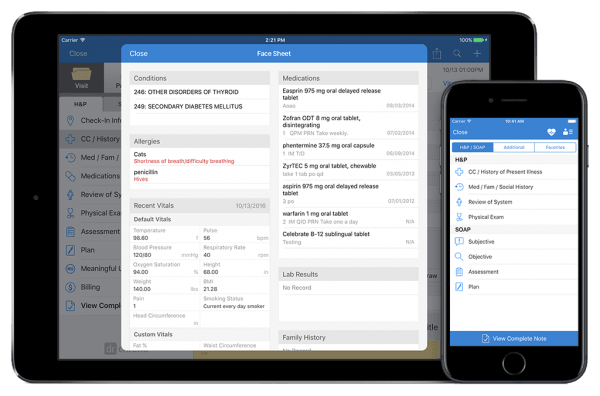
Glimpse of mobile EHR software capabilities via drchrono EHR
There are three different deployment models for mobile EHR solutions. These include:
Native mobile EHRs. While the offerings here are limited, a mobile-first EHR is probably what you want most. This would be a app developed specifically for the specific mobile device platform you use.
Web browser-based EHRs. These systems are accessed through your mobile device's web browser. This option also grants seamless access via desktops and laptop computers for access across the board.
Remote-access EHRs. Many on-premise EHRs systems can be accessed directly through a server. While this does enable mobility, it can stifle the potential benefits, as this deployment essentially renders your mobile devices as if they were a desktop or laptop.
Common Features of Mobile EHR Software
Mobile EHR software provides practitioners and support staff with the necessary tools to consistently support excellent patient experiences. Key features include:
Document management | Create and store various document types that contain critical patient information. Scan in existing paper-based documents. Organize documentation for efficient searching and filtering. |
Scheduling | Enables practitioners to view and edit daily/weekly/monthly calendars. Add notes and reminders within scheduled appointments. |
Billing | Manage insurance claims as well as insurance and patient payments. |
Patient charts and notes | Articulate past patient health information in organized, easily scannable chart documents. Create customizable templates to record patient notes directly onto mobile devices for future use. |
Prescription management | Instantly send prescription documentation to patients and their preferred pharmacies. Review past prescription history and access valuable information regarding safe usage of prescription. |
HIPAA compliance | The sensitive nature of a patient's medical information requires practices meet specific federal regulations. HIPAA-compliance is a key regulation that you should ensure your new EHR takes into account. |
What Type of Buyer Are You?
Small practices. These buyers work for small practices with only a couple of health care providers. They are looking to automate and digitize medical processes. Cutting back on paper-based document management decreases the chance of human error, and provides more efficiency prescribing and integrating with labs.
Midsize to large practices. These buyers are at practices with anywhere from a few to over 100 physicians. These buyers are need to eliminate paper-based documentations and increase overall efficiencies. They also often need to integrate with existing health care networks' systems to track critical information across several locations in order to offer patients a consistent and positive experience.
Inpatient care organizations. These buyers are working for hospitals and large acute care centers. They need help managing patient facilities, such as rooms/beds, as well as assigning and tracking rounds covered by nurses and physicians. The nature of such capabilities means these systems often need integration capabilities with existing systems.
Benefits of Adopting Mobile EHR Software
There are different benefits that mobile EHR technologies will bring your practice based on your current operational pain points. However, the most common benefits of mobile EHR use include:
Greater efficiencies. By adopting EHRs, especially mobile-supported systems, practitioners can eliminate time-consuming paperwork, manage charts digitally and leverage the connected capabilities to easily obtain lab results and prescribe medications.
Ensure positive care experiences for patients. The greater efficiencies that these systems provide practices enable practitioners and support staff to spend more time with patients.
Improved collection capabilities. EHR systems provide physicians with the documentation they need to successfully file and support insurance claims, as well as Medicare and Medicaid. Integrated coding features help ensure providers are appropriately and accurately coding visits.
Market Trends to Understand in Mobile EHR Software
Internet of things (IoT). While this guide focuses on the benefits of mobile-enabled EHR systems, IoT devices are on their way to having a major impact on health care. Wearable devices are being worn by patients for a myriad of health-related reasons. These devices provide a ton of data to tap into that can offer better insight into patient health.
Security. Perhaps the most common concern we hear regarding mobile EHR adoption is system security. Patient privacy and HIPAA compliance are often top-of-mind for providers, so secure implementations and standard security measures are an important consideration when choosing software.
Patient portals. As the health care space moves more toward complete digitization, it's important to remember that this isn't reserved only for providers. Patients have now come to expect access to their medical information via online and/or mobile portals. It's definitely something that should be on your technology roadmap, so checkout our guide on patient portal software for a quick rundown of what to look for here.